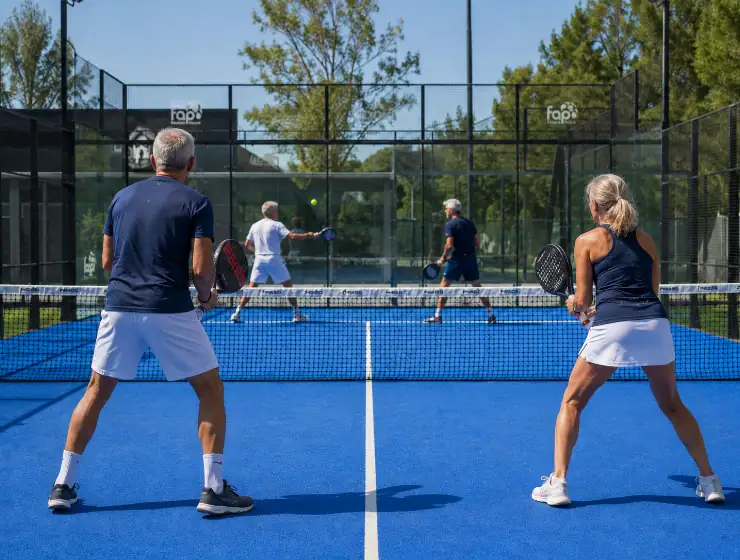
Padel for over-50s is a very interesting option for staying active, improving coordination and enjoying a social sport without needing previous experience. It is dynamic, fun and easier to start than other racquet sports, but it is important to do so with the right progression and to pay attention to technique, warm-up and equipment.
After 50, the goal should not be to play harder, but to play better, move safely and enjoy every match without overloading the body.
Benefits of padel after 50
Padel combines cardiovascular exercise, coordination, reflexes and social interaction. As it is usually played in pairs, it also encourages communication and motivation, which is very useful for maintaining a stable sports routine.
Some of its main benefits include:
- Improved mobility
Short movements, turns and changes of direction help keep the body active. However, they should be worked on progressively to avoid sudden movements at the beginning.
- Moderate cardiovascular work
A padel match can help you improve endurance without needing to run long distances. The intensity can be adapted according to the players’ level and the length of the points.
- Coordination and reflexes
Padel requires you to read rebounds, calculate distances and react quickly. This makes it a very complete sport, both physically and mentally.
- Social element
One of the great attractions of padel is that it is played in pairs. For many people over 50, it is an excellent way to meet others, join groups and maintain an active social life.
On our padel courts in Estepona, you can play, train, take part in mix-ins and enjoy matches adapted to different levels.
Precautions before starting
Although padel is accessible, we must not forget that it involves changes of direction, braking, turns and repeated shots. That is why it is important to take some precautions.
If you have not done sport for a long time, have a previous injury, joint pain, cardiovascular problems or doubts about your physical condition, it is advisable to consult a healthcare professional first. This article offers general advice, but it does not replace a personalised medical assessment.
It is also important not to compare yourself with younger players or with people who have been playing for years. Every body has its own rhythm, and progressing safely is more important than winning points from the first day.
Recommended warm-up for over-50s
Before playing, spend at least 10 minutes preparing your body. A good warm-up may include:
- Brisk walking or very gentle jogging.
- Mobility exercises for ankles, knees and hips.
- Gentle shoulder and trunk rotations.
- Controlled lateral movements.
- Soft shots close to the net.
- Gradual intensity before starting the match.
Avoid going straight into intense points. Many discomforts appear because the body is not yet prepared to accelerate, brake or turn.
Shoes and racket: two important decisions
Equipment has a major influence on comfort and safety. To play padel, it is not advisable to use just any sports shoe. Ideally, you should use specific padel shoes, with good lateral support, suitable grip and cushioning.
As for the racket, for over-50s it is usually advisable to start with a light, manageable racket with a large sweet spot. A racket that is too hard or too heavy can cause discomfort in the elbow, wrist or shoulder, especially if the technique is not yet well established.
It is not about buying the most expensive equipment, but the most suitable for your level, physical condition and playing frequency.
How to start if you have never played
The best option is to start with lessons before jumping into full matches. In the first sessions, you should learn:
- Basic position
Maintaining an active posture, with the racket ready and the legs slightly bent, helps you react better without exaggerated movements.
- Simple shots
The bandeja, volley, lob and baseline shots should be learnt gradually. At the beginning, the goal should be to keep the ball in play and place it well, not to look for power.
- Using the walls
One of the most difficult aspects for adult beginners is understanding rebounds. With guided exercises, you learn to wait for the ball, read its path and avoid rushing.
- Communication with your partner
n padel, speaking to your partner is essential. Saying “mine”, “yours”, “move up” or “back” helps avoid collisions, hesitation and easy mistakes.
If you want to start with professional guidance, padel lessons in Estepona are a good way to learn technique, positioning and playing rhythm from the beginning.
Recommended frequency
To start, 1 or 2 sessions per week may be enough. If the body responds well, you can progress to 2 or 3 days per week, alternating lessons, gentle matches and rest.
It is better to play with moderate regularity than to play many matches in a row without recovery. After 50, rest is also part of training.
Common risks and how to reduce them
The most common discomforts usually appear in the shoulder, elbow, knee, calves, lower back or Achilles tendon. To reduce risks:
- Always warm up before playing.
- Use specific shoes.
- Choose a comfortable racket.
- Avoid overly intense matches at the beginning.
- Learn technique with a coach.
- Work on mobility and strength off court.
- Rest if persistent pain appears.
Conclusion
Padel for over-50s can be a fantastic way to stay active, improve health and enjoy a social environment. The key is to start calmly, choose the right equipment, learn the correct technique and respect the body’s rhythm.
With suitable progression, adapted lessons and balanced matches, padel can become a safe, enjoyable and highly motivating sports routine for many years.